
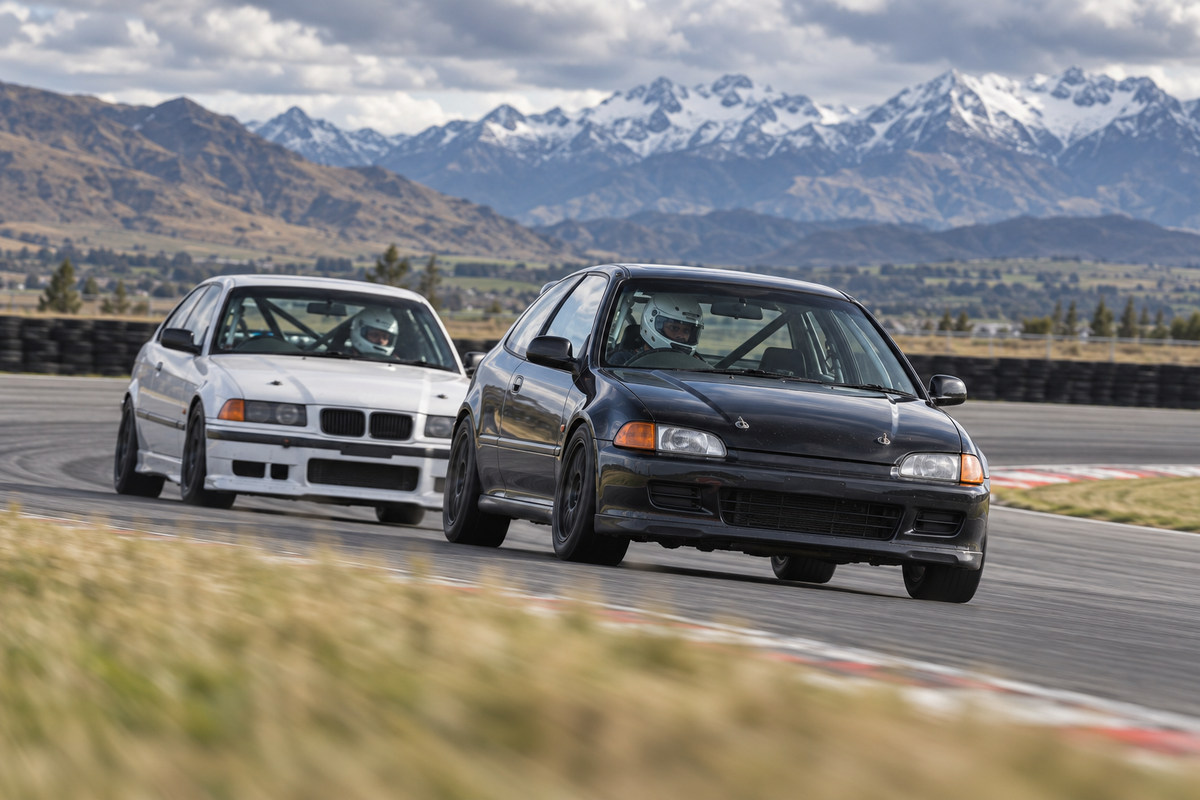
Motorsport disciplines
A circuit sprint rewards precision around a closed course; a rally links stages with navigation and service planning; autocross uses a temporary course and can allow a standard road car in certain entry-level formats; karting brings the competition close to the ground with a purpose-built vehicle. Hill climbs and tarmac events ask a driver to learn a course where grip, elevation and weather can change quickly.
The label “club motorsport” does not mean every event uses the same safety equipment. Some ClubSport Basic activities have modest vehicle requirements, while race and rally disciplines may require roll protection, harnesses, fire equipment, a logbook or other modifications. The event’s supplementary regulations and the current MotorSport New Zealand manual describe what applies to that specific competition.
| Format | Main skill | First detail to verify |
|---|---|---|
| Autocross or motorkhana | Car control, braking and precision at lower event speeds. | Whether the road car meets tyre, helmet and vehicle inspection rules. |
| Club circuit event | Consistent lap pace, braking points and awareness of other cars. | Licence grade, safety gear, scrutineering and track briefing. |
| Rally | Driver-co-driver communication, pace notes and stage rhythm. | Vehicle preparation, crew requirements, event licence and route rules. |
| Karting | Line choice, race craft and repeatable control in close competition. | Age group, kart class, protective clothing and whether equipment is supplied. |
| Hill climb | Precision on a short closed course with changing elevation. | Course access, road closure, vehicle class and event-day weather plan. |
Vehicle choice. Some entry-level ClubSport events allow a standard road car with relatively modest requirements, while circuit racing and rally need specific equipment and preparation. Check the current regulations for the exact event before entering.
New Zealand’s club structure is the entry point
MotorSport New Zealand permits events through affiliated clubs and manages competition licences. A prospective competitor starts by finding a local club, attending an event as a spectator or volunteer and asking which discipline suits the vehicle. A club can explain the licence category, training, event calendar, safety equipment and technical rules before a person spends money on a conversion.
A car built for one rule set may be ineligible for another. Vehicle modifications change safety, eligibility, insurance, road registration and resale value. Talk to the event organiser or technical department before installing a seat, harness, cage or engine part. Keep invoices, serial numbers and photographs of work; a technical inspection is easier when the vehicle’s changes are documented.
Licences, event formats and eligibility can vary by discipline and participant status. MotorSport New Zealand lists competition licence classes, including ClubSport, Race, Rally, International and Junior pathways. Some applicants who were born overseas need clearance from their home motor sport authority before a New Zealand licence can be issued. The current licence page sets out the details for each case.
 Paddock preparation, tire strategy, and track safety inspections ahead of weekend circuit events.
Do not confuse a track day with a permitted competition
A non-competitive track experience may be organised for instruction, familiarisation or open lapping, while a permitted competition has formal entries, licence requirements, officials and event regulations. The car, safety gear, passing rules, insurance and incident procedure can differ. A driver should read the organiser’s conditions rather than assuming that a previous track day or road licence covers the next event.
A standard road policy may exclude damage during a timed event, a track day or a competition, even when the vehicle is road registered. Ask the insurer what is covered, read the exclusion wording and consider the cost of a recovery or repair before entering. Do not assume the event operator’s public liability policy covers damage to a participant’s car.
A co-driver, mechanic or spectator may have separate entry conditions. Passenger rides can require additional approval and equipment. A person in the paddock should stay outside marked working areas unless authorised; the team’s workshop space may include hot parts, moving vehicles and tools.
Budget for the whole season
Entry fees are only one part of a motorsport budget. Add fuel, tyres, brake pads, fluids, transport, accommodation, protective gear, vehicle inspection, licence and club membership. A rally can involve travel across several regions and a support vehicle; a circuit series may involve repeated tyre and brake use. A karting season has its own class-specific consumables and equipment needs.
- Ask whether the vehicle can compete in standard form before pricing modifications.
- Price an approved helmet, clothing and any mandatory restraint or fire equipment.
- Include club membership, licence, entry fee and event levy.
- Estimate fuel for travel, the competition and the race session.
- Keep a reserve for tyres, repairs and an event that runs into the next day.
- Find out whether a cancellation, mechanical failure or weather change affects the entry fee.
A novice should not compare a first event with a professional car build seen online. A well-maintained, rule-compliant car and a patient learning plan are more useful than an expensive modification that has not been checked against the regulations. Many clubs include a range of preparation levels, but the event must be selected to match the entry and safety requirements.
Safety is part of the event design
Closed-course competition reduces exposure to ordinary road traffic, but it does not remove risk. Driver briefing, vehicle scrutineering, flags, marshals, fire response, medical plans, recovery procedures and clear pit rules work together. Competitors need to understand what a flag means, where to stop after a problem and how to signal if a car is damaged.
Heat, fatigue and concentration affect judgement. Drink water, eat at suitable intervals, wear hearing protection in noisy areas and take breaks between sessions. A driver who feels unwell, has taken a medication that affects alertness or is distracted by a mechanical issue should tell the organiser. Concealing a problem can put the driver, marshal and other competitors at greater risk.
Protective gear needs correct fit and current approval. A helmet that is damaged, modified or out of the permitted standard may fail scrutineering. Harnesses, seats and fire systems have service lives and installation requirements. A workshop familiar with the relevant competition rules can check how the seat, harness and other safety equipment fit and function together.
Helmet standards. Do not assume a road motorcycle or cycling helmet meets a motor sport event’s standard. The organiser specifies approved helmets and any required clothing. The helmet must also fit correctly and be in acceptable condition.
The event day is a team operation
Competitors rely on co-drivers, mechanics, club volunteers, marshals, scrutineers, officials, timekeepers and recovery crews. A volunteer marshal may be standing close to a live course, so competitors must follow flags and instructions immediately. In rally, the co-driver manages route information and timing; the role requires concentration and trust as well as a seat beside the driver.
Arrive with enough time for sign-on, vehicle checks, a briefing and a walk of the course where allowed. Bring the documents listed by the event: licence, club membership, entry confirmation, vehicle logbook, medical declaration or other forms. Do not assume a previous event’s checklist is still valid; the supplementary regulations can change for each meeting.
Families attending as spectators should stay behind barriers, supervise children, protect hearing and use only authorised crossing points. A car can leave the course with little warning. For rally stages, follow road closure notices and marshal directions; do not stand in a run-off area or outside the designated spectator zone.
Watching New Zealand motorsport
Local events can be a more instructive introduction than a headline championship. At a club meeting, fans can watch several classes on the same programme and compare how drivers adapt to different cars. A spectator can learn a great deal by watching the start, a braking zone and a safe exit rather than trying to follow every lap from one position.
Motorsport New Zealand’s calendar and club notices provide a starting point, but organisers publish event-specific access, ticketing, parking and spectator rules. Rally stages may be remote and have no food or phone coverage. Circuit venues may have noise limits, accessible viewing areas or restricted paddock access. Check details before travelling and carry water, weather protection and a charged phone.
When sharing photos or video, stay within marked public areas and avoid obstructing officials. A social post can show speed, but it cannot communicate the safety procedure that made a viewing point acceptable. Credit the photographer and driver where possible, and do not livestream restricted areas or private vehicle details without permission.
Moving from interest to a first event
- Pick one discipline that fits available time, vehicle access and tolerance for travel.
- Contact a local affiliated club and ask to observe or volunteer at a permitted event.
- Read the event’s supplementary regulations and current competition manual.
- Confirm licence grade, membership, age and eligibility requirements.
- Check vehicle class and safety equipment with an organiser before making changes.
- Budget for follow-up events as well as the first entry.
Volunteering lets someone see how an event runs before committing to a car or licence. A day helping at sign-on, timing or course setup reveals how an event runs and who can answer technical questions. It also shows the amount of behind-the-scenes work needed to make a safe competition possible.
Licence scope. Licence grades, event permits and overseas competition have their own rules. A New Zealand licence may not cover every class or foreign event. Confirm the required grade and any visa or clearance through MotorSport New Zealand and the event organiser.
Entry documents. Read the supplementary regulations, vehicle and safety requirements, licence conditions, schedule, cancellation terms and spectator or paddock rules. Ask the club if a rule is unclear rather than relying on a forum post from a previous season.