
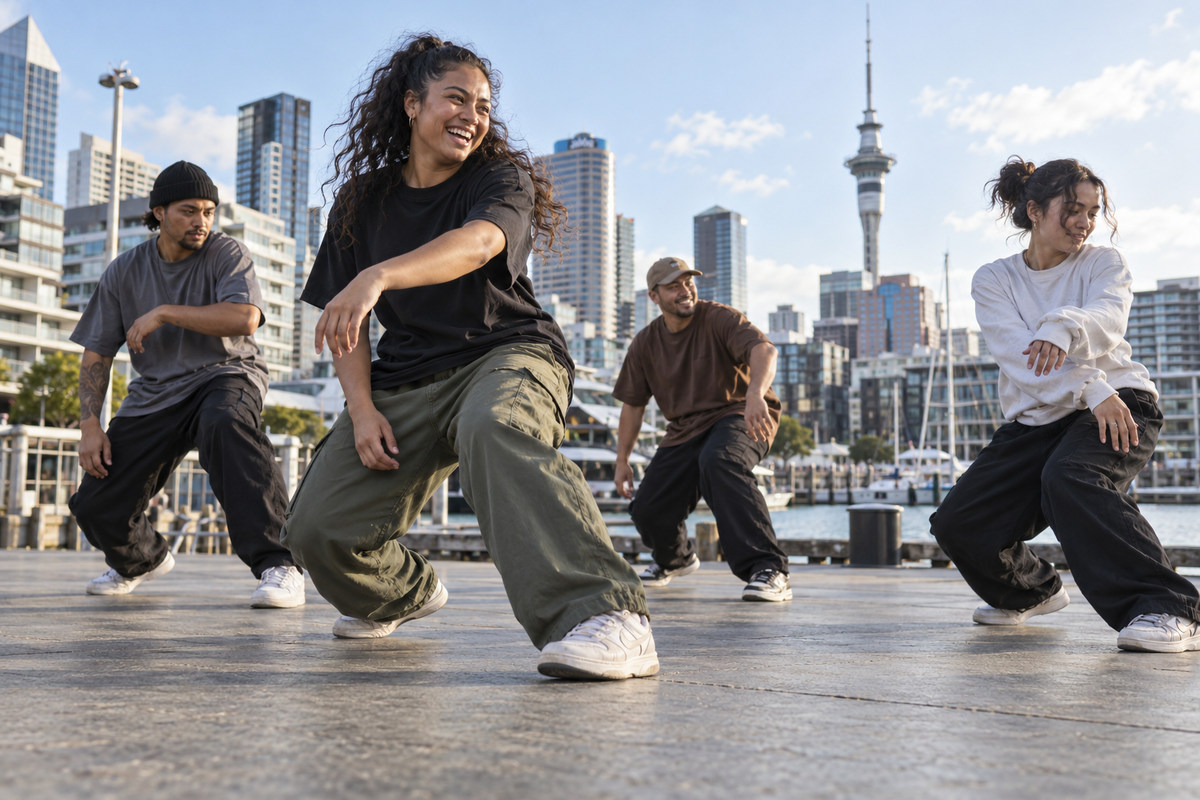
The context behind a local reference
Everyday cultural references
Pop culture includes everyday references people share and recognise. People recognise a catchphrase, a team colour, a familiar food, a song at a wedding or a character from a show. They use those signs to express belonging, humour, memory or disagreement. A reference can be small and still reveal what a community has been paying attention to.
In New Zealand, the same reference can mean different things to people in different regions or generations. A comedy sketch may land differently in a city than in a town whose name or accent it borrows. A local sports result can become national conversation for a week and remain a family story for decades.
Television turns a phrase into a meme; a social clip sends a singer to a festival stage; a fashion trend moves from a diaspora community to a retail chain; game streams turn a play into a catchphrase. As a reference moves between media, its context and who benefits from the attention can change.
Cultural scope. It includes widely shared entertainment and everyday creative references made or adapted in Aotearoa: screen work, music, sport, fashion, comedy, food, games, memes, community events and public conversation. It changes over time and differs between regions and communities.
Aotearoa identity has more than one centre
Māori are tangata whenua, and te ao Māori, te reo Māori and tikanga are central to understanding Aotearoa. That does not make Māori culture a decorative national theme that any creator can detach from its relationships. Iwi and hapū have distinct histories, authorities and practices. A word, pattern, story or taonga may carry obligations that cannot be replaced by a generic “Māori-inspired” label.
Pacific communities shape New Zealand’s present-day culture. Their languages, churches, families, comedy, music, sport and fashion shape everyday culture across the motu. Migrant and multi-generational communities bring references that change as families settle, travel and build new connections. A school, workplace or neighbourhood can contain several cultural calendars and ways of telling a story at once.
A broader pop-culture picture does not require every programme to represent every community. It does require a range of people to be visible as complete characters and creators, with humour, conflict, ordinary life and creative control. Repeatedly casting a community in the same kind of role leaves other experiences off screen.
Audience reach. It represents people who encountered and engaged with that format, not necessarily the whole country. Platform users, language, age and recommendation systems shape who appears. Check the source and audience before turning a viral moment into a claim about everyone.
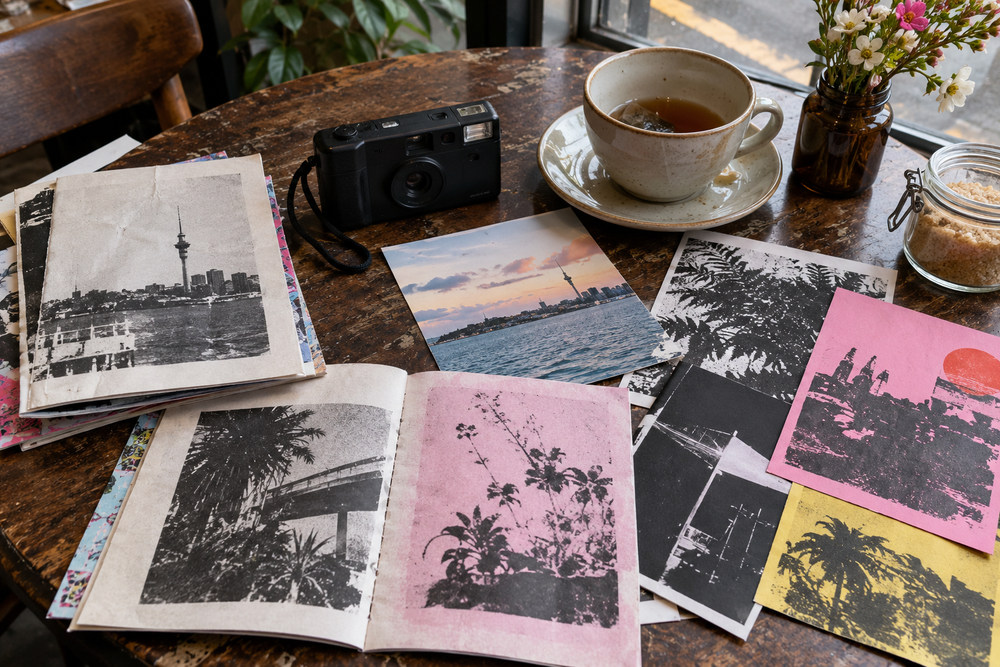 Creative festivals and visual media balance local self-expression with international attention.
Local screen and music have an audience
New Zealand stories do not have to imitate overseas genres to hold attention. A local comedy can use social codes an international viewer will not recognise, while a local drama can build tension from distance, housing, work, weather, family obligation or a familiar institution. Recognition of a life rarely seen in imported entertainment can make a show feel close.
A shared cultural reference may begin in a screen story and take on a life beyond it: people quote a line, recreate a scene or use a character to explain a mood. The reference can travel because the characters feel familiar, because the local setting is specific or because the story challenges what audiences expect from an Aotearoa life.
Recognition can come from a coastline, an accent, a family dynamic or the way a joke depends on local knowledge. It can also come from a point of view that feels unfamiliar but opens a new way to see Aotearoa. A local story does not need to mirror every viewer’s life to become part of a shared cultural conversation.
Local media. Local media can carry regional accents, places, public issues and creative work that global catalogues do not prioritise. It also gives people a shared reference point for events and stories that shape everyday life in Aotearoa.
Pop culture is also made at home and in public
Not every influential cultural moment starts with a production company. Family recipes, school performances, local club rituals, a mural, a community radio show, a drag night or a handmade costume can be central to the people who share them. Public institutions and online platforms make some forms visible, while unpaid community work keeps many others alive.
People often alternate between watching, making, teaching, volunteering and sharing cultural work. A school costume, local mural or community radio show may matter deeply within its community without reaching national media.
Visibility also carries a cost. A community performer may not want a private gathering filmed; a teenager’s face can remain searchable long after a school event; a public mural may have a creator who expects to be named. Before filming or reposting, check who is shown, what context is missing and whether consent is appropriate.
Where a trend began
How a local moment becomes a shared reference
- Origin: a person or group makes something from a specific place, conversation or event.
- Recognition: an audience understands the reference because it shares some context.
- Remix: people adapt the line, sound or image into another format.
- Spread: platforms, broadcasters, news coverage or friends carry it to a wider audience.
- Reframing: a new audience may change the meaning or detach it from the original creator.
This path can build an audience for a local artist, but it can also turn a community moment into uncredited material. A meme may circulate without a name or source; a dance can be copied without acknowledging its choreographer; a joke may travel beyond the group it was made for. The creator’s authorship and the audience’s interpretation are connected, but they are not the same thing.
Platforms reward repeatable formats, which can make a sound or catchphrase feel bigger than its origin. A person who wants to share it can credit the original account, avoid presenting someone else’s work as their own and add context when the clip involves a real person or community. Credit and context let later viewers trace the clip to its creator.
When humour or trend crosses a boundary
Humour can challenge power, build solidarity and make a serious subject easier to approach. It can also target people who have less control over the story. A joke about an accent, disability, body, religion or migration experience may punch up in one setting and reinforce exclusion in another. A joke’s intent, audience, impact and history all affect how it is received.
Creators can ask whether the people represented helped shape the work, whether the joke needs a private detail, and whether a group is being reduced to one trait. Audiences can distinguish a sharp critique of an institution from an attack on a person with less power. A context note may help, but a disclaimer does not make a harmful post harmless.
Online disagreement also changes fast. A clip can be cut from a longer conversation, translated without nuance or presented with a caption that reverses what was said. Before sharing an inflammatory post, find the full recording, check the original account and see whether a correction has been issued. Waiting a few minutes can prevent a temporary outrage from becoming a permanent false claim.
How to follow a trend without losing the source
Source details behind a pop-culture moment
- A viral clip: The earliest available upload and creator account provide the source. Source details: Original caption, date, language and surrounding conversation.
- A local news headline: The full announcement or interview provides the surrounding context. Representation: Whether the quote is complete and who is being represented.
- A borrowed sound or dance: Originator credits and the source community clarify attribution. Reuse and credit: Whether a commercial use changes the benefit or meaning.
- A “national” trend: The groups, regions and ages represented define the trend's scope. Audience limits: A platform trend does not equal universal experience.
- An AI-generated image: Provenance, creator disclosure and identifiable people affect consent and accuracy. Consent and accuracy: Consent, accuracy and the risk of a realistic false depiction.
Respectful reuse. Look for credit, context, permission where needed and a real relationship with the people or tradition involved. For Māori material, identify the iwi or community context rather than using “Māori-inspired” as a catch-all. A source’s absence is a reason to ask more, not proof of consent.
How local work remains findable
A broader local culture feed
Local discovery comes through many sources: broadcasters, artists, venues, bookshops, museums, cultural organisations, sports clubs and community media. Newsletters, public calendars and library catalogues provide routes beyond app recommendations, especially for small events a global platform has little reason to promote.
- Follow creators directly and keep their names with saved clips.
- Look for local event listings and ticket terms before making travel plans.
- Use captions and content notes to decide what suits the moment.
- Credit the original maker when sharing a remix, artwork, phrase or performance.
- Leave room in a feed for people and places outside your usual recommendations.
Knowing where a joke, song or image began can help people from different communities understand the reference. Without that context, the reference may still circulate, but the people who made it become harder to see.
Archives keep short-lived culture findable
A social clip may disappear when an account closes, a platform changes its rules or a creator removes a post. Libraries, broadcasters, museums and community archives preserve selected records so future audiences can understand what people watched, heard and made. An archive cannot preserve every joke or trend, but careful context can keep a local voice from being reduced to an unlabelled screenshot.
When saving a public post for an organisation, note who made it, when it appeared, the language used and whether permission covers reuse. A screenshot without its source can make a joke look like a statement or strip a work from the community that created it. Keeping the source and community context with a file helps preserve its meaning.