
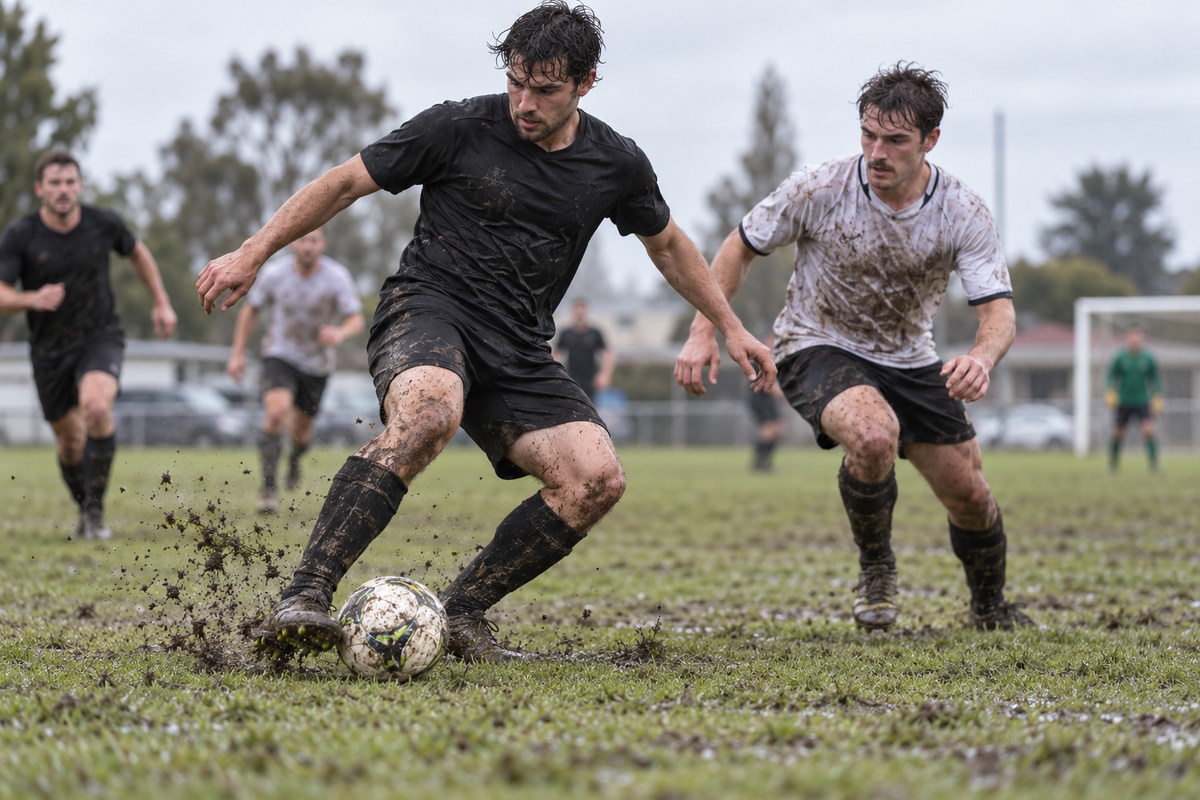
The format shapes the competition
A social futsal team can play indoors after work with a compact squad; a winter football club may require weekend travel and regular training; a school team may use a shorter season with a different fee structure. The sport’s name does not tell you the weekly attendance a player is expected to maintain, what equipment is required or how far the team travels.
Football is delivered locally through clubs and regional federations, with New Zealand Football setting national frameworks and regulations. The Whole of Football 2.0 changes are being introduced across 2026 and 2027, so age-group formats and local rollout dates can differ by federation. Futsal offers a smaller, indoor version of the game, with its own rhythm, court surface and rules.
Other sports can suit the same family for different reasons. Netball and basketball create repeated changes of direction and short bursts of play; cricket has longer match formats and specialist roles; rugby codes combine running and contact; hockey uses a stick and a hard ball.
Futsal versus informal indoor football. Futsal has defined rules, a smaller court, a low-bounce ball and particular restart procedures. Informal indoor football may use different local rules. Ask the organiser which format is played before choosing shoes or expecting an outdoor game’s pace.
Football formats change the experience
| Stage | Common format listed by NZ Football | What the format changes |
|---|---|---|
| First Kicks, under 7 | 3 versus 3 | More touches and a simple introduction to movement with the ball. |
| Fun Football, under 8-9 | 5 versus 5 | Small teams keep the play active and leave room to learn through games. |
| Mini Football, under 10-11 | 7 versus 7 | A larger field and more teammates introduce wider passing options. |
| Mini Football, under 12-13 | 9 versus 9 | Players begin to manage more space and shared team roles. |
| Youth and senior | 9-a-side, 11-a-side, futsal or social formats set by competition level | Competitive ambition, training load and travel begin to vary more widely. |
These formats are a national framework, not a promise that every local club has the same pitch, timetable or team availability. A regional federation can confirm which season a change takes effect, how dual-age teams are handled and what a player should bring. Small-sided games can give players more opportunities to make decisions and connect with teammates.
Youth formats. New Zealand Football sets the national framework, while regional federations and clubs manage rollout. During the 2026-27 transition, local age groups and implementation dates may vary. The regional federation’s current season information is the reliable place to confirm the details.
 Community leagues bring together amateur athletes for weekly competition and team camaraderie.
Questions to ask before signing up
Adult entry.
Many clubs offer social, beginner or mixed-ability options, though availability varies by region and season. Ask about the level, contact, training expectation, substitutions and whether a casual trial is possible. A team’s actual pace is more useful than its label.
Club registration.
Fees, training and match schedules, required equipment, travel, team communication, injury procedures, safeguarding contacts and refund rules should be clear. A new player should know who to ask when a problem appears.
Safe and welcoming teams need visible processes
Players need a way to raise concerns, consistent responses from coaches and protection from harassment. These protections apply to both children and adults. A player should know who the safeguarding contact is and whether that person is separate from the coach involved in a complaint.
Head knocks deserve a clear process. A player with a suspected concussion should come off and be assessed; teammates should not pressure them to return because the match is close. Football and other contact sports publish sport-specific concussion and return-to-play guidance, and clubs should follow the current rules rather than improvising from a previous injury.
Inclusion also depends on practical details: changing spaces, uniform options, language access, prayer or cultural needs, accessible transport and the way a team handles mistakes. Ask how a club accommodates a player who needs a modification. A named contact can help arrange adjustments that work for the player.
For parents, the sideline is part of the learning environment. Encouragement helps a child stay engaged; shouting tactical instructions over the coach can make the game harder to follow. Respect for officials and opponents models how competition can remain intense without becoming abusive.
Weather cancellations, school commitments and transport problems can disrupt even a well-planned season. Agree on the team’s official communication channel and check it before leaving home. Keep a spare layer, water and a clear plan for who collects a young player if a match ends late.
Team sport is built by roles beyond the players
A club needs coaches, referees, managers, first-aid support, grounds staff, scorekeepers and people who organise transport and communication. The work can be shared in small tasks rather than concentrated in one exhausted volunteer. A parent who cannot attend every match may still help with a roster, uniform collection or end-of-season event.
Volunteers need clear boundaries. A coach should know how to report a head injury, whom to contact about a safeguarding concern and whether a player may return after an illness. A team manager should know what details can be shared in a group chat and what belongs in a private conversation.
For players, a team’s culture appears in ordinary moments: whether newcomers get explained the warm-up, whether mistakes invite instruction or ridicule, whether the same people are always benched and whether officials are treated with basic respect. A technically strong club can still be a poor fit if a player feels unsafe or invisible.
Training should match the player’s stage
Enjoyment and confidence help young players keep attending and developing skills. Short games, varied movement and time on the ball can be more useful than long queues for a drill. A teenager moving into full-pitch competition may need more attention to recovery, strength, injury prevention and the way school, work and sport fit together.
Adults returning to sport should not copy a professional programme without adapting it. A person who has been inactive, is managing a health condition or has a history of injury can start with lower intensity, longer recovery and a conversation with a health professional where needed. The initial workload should leave enough recovery time to keep training in the weeks ahead.
In football, futsal improves comfort in tight spaces and quick transitions; outdoor football asks for longer runs and decisions across a larger field. Both formats can complement one another, but the extra matches count toward total load. Coaches and players should notice pain, fatigue and recurring knocks rather than treating every session as a test of commitment.
Watching the domestic game
New Zealand football has regional leagues, national cup competitions, professional teams and youth pathways. Local fixtures give supporters a closer view of club identity and player development than a one-off international match. The 2027 national league format is scheduled to shift toward full-season winter competitions for both men and women, with changes to club structures and promotion pathways; exact fixtures and details are set by New Zealand Football.
For a live match, check the venue, surface, kick-off time and entry terms. A community ground may have limited seating and weather exposure, while an indoor futsal venue has different access and parking. If supporting a youth team, follow the competition’s photography and safeguarding rules, especially when sharing images of children.
For viewers who cannot attend, broadcasting and streaming can expand access to regional competition. Check the official competition page close to match day because platforms, free access and start times can change. A schedule copied into a social post may be out of date by the time the match moves.
When a player wants a pathway
- Playing and selection
A competitive pathway can move from a community club to federation programmes, national leagues, professional teams and age-group representative squads. Selection is not a straight ladder. Players develop at different speeds, change positions, return after injury or decide that a social level suits them better. A pathway should preserve the option to keep playing even when elite selection is not the goal.
- Commitment and support
Ask what the next step requires: extra training, travel, trials, costs, medical clearance or a different club. A representative opportunity may involve missing school, family transport and accommodation. The player and whānau should understand the calendar and financial commitment before treating selection as a simple yes-or-no decision.
- Roles beyond playing
Coaching and refereeing are pathways too. Learning to officiate can deepen a player’s understanding of rules and offer a role after playing. A volunteer coach can build skill in communication, planning and safe training.