
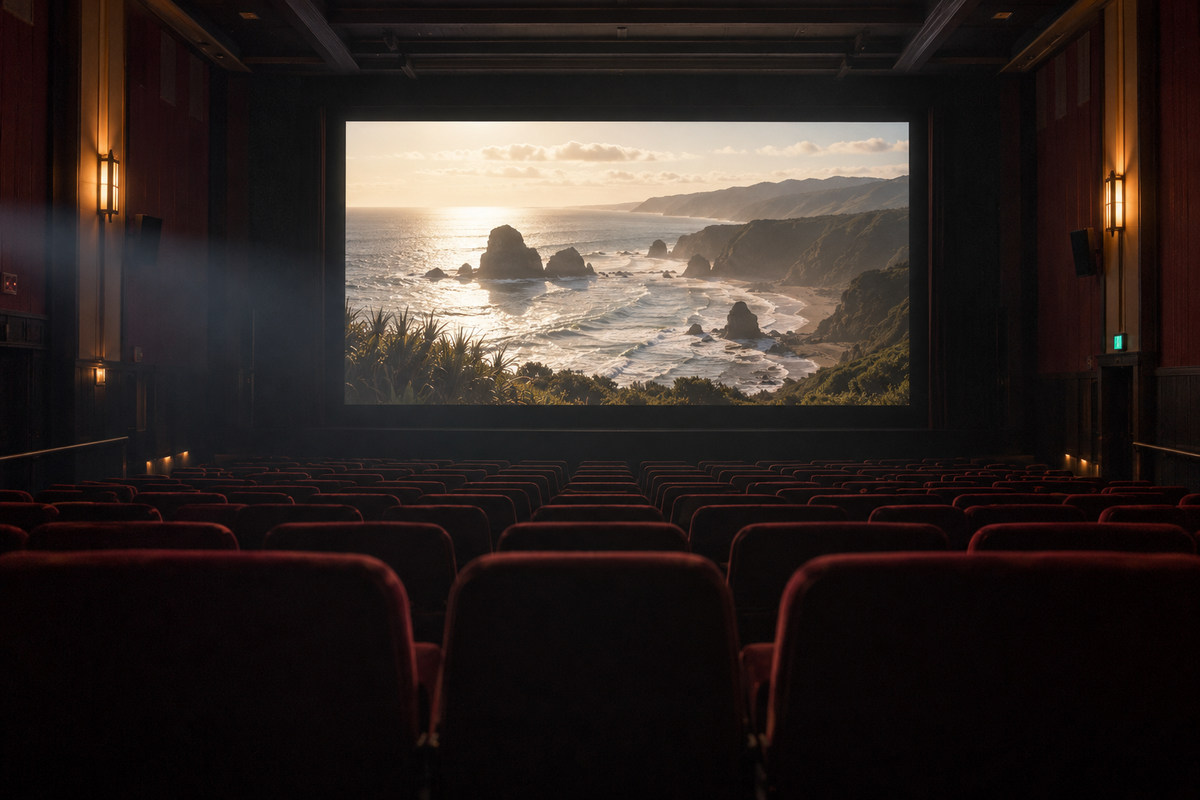
How places shape screen stories
A sweeping landscape is a familiar first signal for an overseas viewer: mountains, harbours, farmland, city streets or a stretch of empty road. For people who live here, place is more specific. Light changes across a long winter evening; travel between towns can take longer than a map suggests; the same beach can be a daily walk, a family memory or a site with deep cultural meaning. A location becomes part of a story when it shapes what characters can do, remember or avoid.
A school uniform, a local radio voice, an argument about the last bus, a club kitchen or the rhythm of a whānau gathering can establish a scene’s location without a sweeping drone shot. These details show how characters live in that place.
For international audiences, language, humour and social context distinguish a local story within a familiar genre. If scenery or a stock accent supplies all the local detail, the characters can feel interchangeable.
Different screen forms make different promises
A documentary crew chooses where to point the camera, which interviews to keep and the order in which viewers encounter them. A careful viewer can appreciate the craft while asking how consent, privacy and a participant’s perspective are handled. The same questions apply to true-crime formats and reality television, where real people may continue living with the consequences after an episode ends.
Documentary point of view. It records real people or events, but framing and editing still create a point of view. Check the time period, the filmmaker’s access, whose voices appear and whether important limits are acknowledged. A documentary can offer a valuable account without being the only account.
Caption information. They show speaker changes, music cues and sounds that affect meaning. Captions help viewers watching in noisy homes, using a second language or following dialogue with unfamiliar accents, as well as people who are Deaf or hard of hearing.
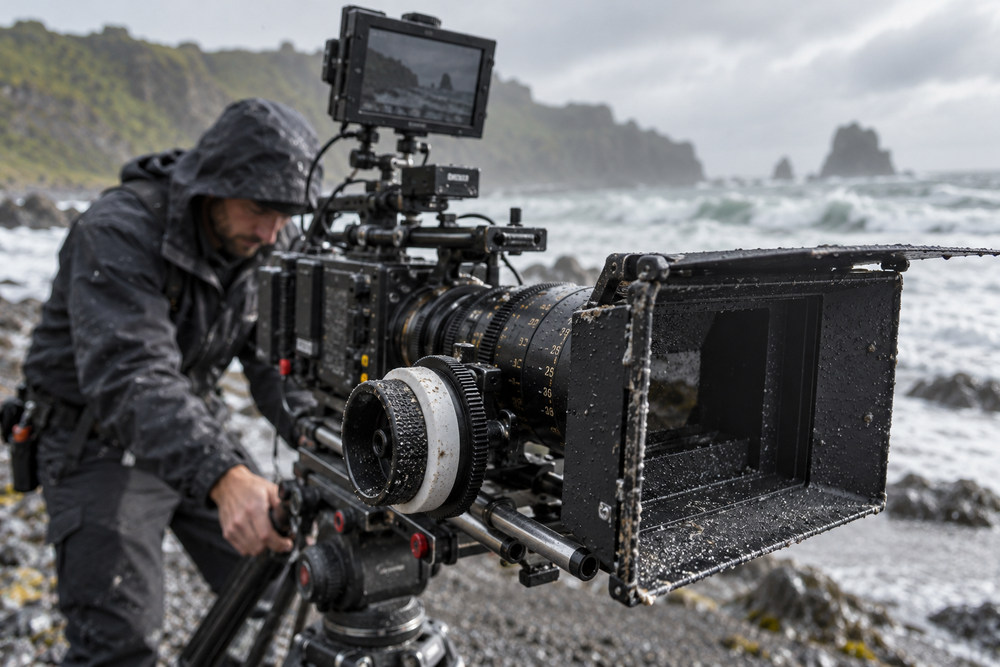 On-location cinematography and distinctive local scripts form the backbone of regional screen production.
Whose story is being told
Screen stories can widen the image of Aotearoa when they give Māori, Pacific, Asian, migrant, disabled and regional voices more than a token appearance. Representation becomes meaningful through point of view: who is allowed complexity, who gets humour, who has agency, and whose language is treated as ordinary. A character’s identity should influence their world where it matters, without becoming the only plot they are permitted to have.
Māori stories require care with whakapapa, tikanga, te reo Māori and the use of taonga. A line of dialogue cannot stand in for relationships with iwi or mana whenua. A production working with community knowledge needs appropriate collaboration, permission and context at the development stage, when decisions about characters, locations and story ownership can still change.
Subtitles and dubbing also shape access. Subtitles can preserve original performance and language; dubbing can make a programme easier for some viewers to follow. Captions that identify sound effects and speakers help Deaf and hard-of-hearing audiences, while audio description can bring visual storytelling to blind and low-vision viewers. These versions allow audiences with different access needs to follow the same story.
Screen identity. No single visual feature defines a New Zealand film. New Zealand content can be recognised through its creators, financing, subject matter, cultural connections, production location or legal criteria used by a particular programme. A story shot here for an overseas production can contribute local jobs without being a New Zealand story in the cultural sense.
How a local production reaches an audience
- Production route
A film usually moves through a chain: development, financing, production, post-production, sales or distribution, then a mix of cinemas, festivals, broadcasters and on-demand services. Not every title uses every stop. A project may begin with a cinema release; a documentary might premiere at a festival and later appear on a local platform; a series may be commissioned for broadcast and become available on demand after transmission.
- Funding role
The New Zealand Film Commission invests in the development and production of New Zealand films, filmmaker capability, audiences for local films and international production activity. That is one part of a wider screen ecosystem that includes writers, crew, editors, sound teams, actors, post-production houses, exhibitors, local broadcasters and streaming services. A production rebate can help attract expenditure, while cultural investment helps stories reach the screen; the two have related but different aims.
- Finding a title
For viewers, availability is uneven. Streaming rights can change by territory and date, and a film that played in one cinema chain may not appear on a service in every region. A listing page can show a title without confirming that New Zealand viewers can watch it on that date. Check the service’s own catalogue and the title’s release date before planning a group screening.
The screen sector includes many kinds of work
A film or series is made by a network of specialists: development producers shape a project, writers build its structure, casting teams find performers, location managers coordinate access, camera and lighting crews create the image, and editors, sound designers, composers and colourists complete the work. Production assistants, caterers, drivers, accountants and safety teams keep a set functioning. A local production gives crews experience across these roles even when the story is set elsewhere.
Spending on a location crew or post-production service supports capability and employment. A story created from local perspectives can also shape the way people see a place or community. The two outcomes may overlap, but neither should be presented as automatic proof of the other.
Development funding can support a script before a production is ready; production investment helps a project reach filming; a rebate offsets qualifying production expenditure; a broadcaster or platform decides how a finished title reaches audiences. An announcement of development or production funding does not establish a release date.
Production credits identify the people who made the film or series. Notice the director, writers, producers, cinematographer, editor, composer and cultural advisers. A role in the final credits may have shaped the work as much as a face on the poster, and those credits help audiences find more work from the same creative team.
Finding local work without relying on the feed
Recommendation systems favour formats and performers a viewer has already watched, leaving less familiar local titles outside the home screen. A deliberate search can uncover work that never enters a personalised home screen: local film festival programmes, public broadcaster catalogues, filmmaker pages, regional cinema listings, Māori and Pacific screen organisations, library collections and school or community screenings.
- Search by director, producer, performer, region or language as well as by genre.
- Check whether the title has captions, subtitles, audio description or a family viewing guide.
- Look at the production year; an older film may still illuminate a present-day conversation.
- Use a festival programme to find short films and first features alongside headline titles.
- Keep a note of the platform and date when a limited screening or rental expires.
- Read a synopsis before a sensitive topic if you need to know whether it includes violence or distressing material.
Local coverage can be hard to discover even when audiences want it. Stable programme pages, clear catalogue descriptions and captions keep a title findable after its first week of promotion; that practical work is part of audience development.
Where to watch. Availability moves between local broadcasters, global streaming services, rental stores, festival platforms, libraries and cinema releases. Search by title on a current New Zealand catalogue page rather than assuming that an overseas availability list applies here.
How to discuss a film after the credits
A discussion can start with a scene: why the director stays in a room after a character leaves, why a scene changes language, why music stops at a particular moment, or why a documentary returns to the same landscape. The answers can reveal how editing, language, sound and repeated images affect the story.
When a story draws on real events or a living community, separate the work’s point of view from the complete history of the subject. A drama may compress events, merge characters or invent dialogue. A documentary may present only the period and people its makers could film. The difference is not a flaw by itself, but a viewer should know what kind of claim the work is making.
Film discussion also travels online. A spoiler label gives others a choice; a content note can make a conversation easier to navigate; naming a performer or creator helps credit the work. Sharing a clip without its source can detach a scene from the people who made it and from the context that gives it meaning.