
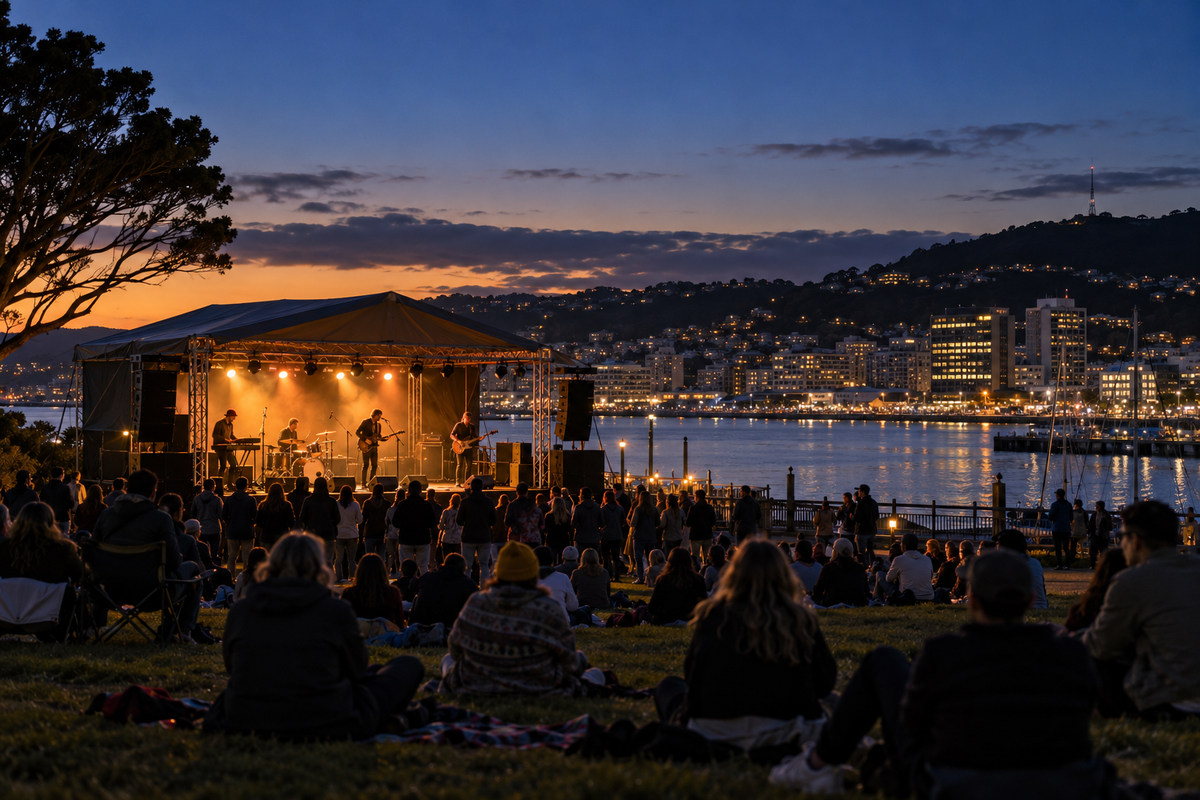
Aotearoa music has many sounds
Māori artists work across waiata, hip-hop, metal, pop and experimental forms; Pacific musicians draw on island, church, family and diaspora traditions; artists with migrant and regional backgrounds connect local experience to global genres. A guitar band, a waiata reo Māori, a dance producer and a singer-songwriter can all be part of the same national music culture without sharing a style.
Genre labels can help a listener find a rhythm, but they are a rough map. An artist may move between soul, electronic music, folk, hip-hop, country, classical or a form that does not fit store categories. Language is a creative choice too. A song may be multilingual, use a local accent, preserve a pronunciation or rely on a phrase that does not translate neatly.
Distance between centres can make touring costly; a small venue may offer a close connection with a crowd but limited capacity; a regional festival can bring artists to an audience that rarely sees touring acts. Digital distribution expands reach, while direct relationships with fans remain important to an artist’s livelihood.
How a song moves from an idea to a listener
- Composition: songwriters create lyrics, melody, chords or a musical arrangement.
- Recording: performers and producers shape a particular recorded version, or master recording.
- Release: an artist or label makes the recording available through streaming, download, radio, video or a physical format.
- Discovery: listeners find it through a friend, venue, playlist, broadcaster, search, social post or festival set.
- Performance: the song may be played live, broadcast, streamed or used in a public setting, creating distinct rights and licensing questions.
The composition and the recording are related but separate works. A songwriter may own the musical work while a record label or independent artist owns the master. A cover version uses the underlying composition but creates a new recording. A remix can involve permission for both the existing recording and the composition if the mix uses part of that recording or only the underlying work.
| Use | What is being used | What to check |
|---|---|---|
| Live gig | A composition performed in a venue. | Whether the venue has the relevant public-performance licence and the artist reports original songs. |
| Streaming release | A recording and the underlying composition. | Distribution agreement, credits, ownership and royalty collection arrangements. |
| Film or online video | A song synchronised with images and usually a particular recording. | Permission for the composition and master recording; sync rights are managed separately by their owners. |
| Cover at a show | Another writer’s composition performed by a new artist. | Venue licensing and accurate performance reporting so the original writers can be credited. |
| Music in a shop or class | Recorded music played publicly in a business setting. | Whether a licence is required for the venue and type of use. |
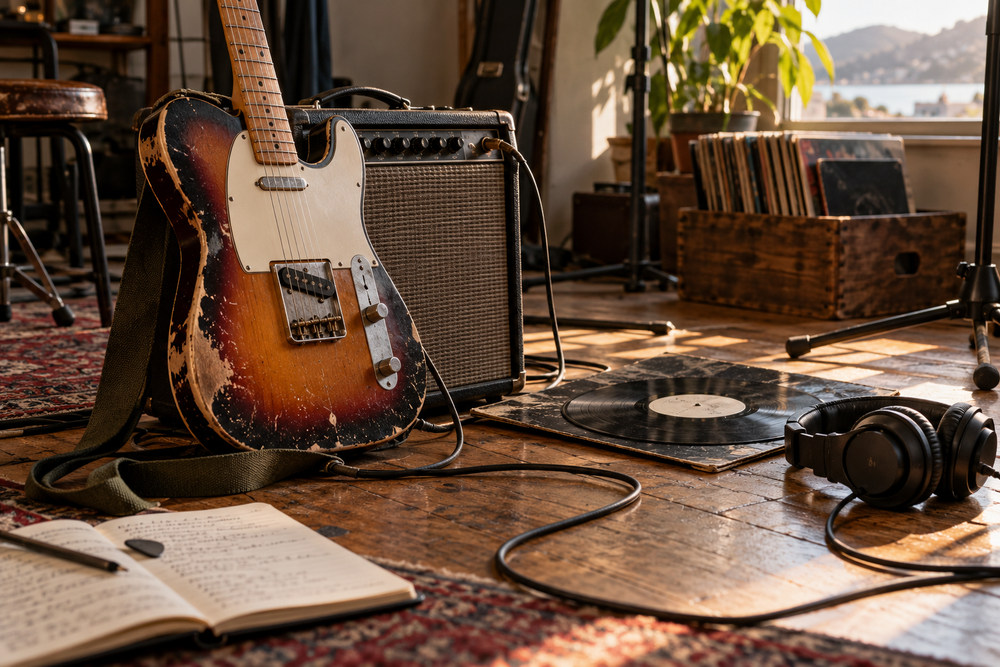 Community live music rooms remain the critical launchpad before releases enter global streaming feeds.
Streaming made access easy and discovery uneven
A streaming service can carry a song without making it easy for listeners to find. Playlist placement, recommendation systems, search terms and release timing shape what listeners see. A track may have a strong local following without appearing in an overseas “new music” feed, while an algorithm can keep surfacing the same familiar artists.
Direct artist pages offer another way to find releases. For local scenes, radio presenters, independent labels, venue programmes, music writers, festival line-ups and artist-curated playlists add context that a global feed may not provide. A listener may discover an act through a performance or a shared recommendation rather than an algorithm.
A presenter can connect a new song to its scene, explain a name or place, and place an emerging artist beside a familiar one. A playlist can reproduce that context only when its description, credits and selection are handled with care.
Local discovery. Search and recommendation systems respond to user behaviour and cataloguing. A listener can follow the artist directly, save a track, explore local playlists and radio, and search by label or venue. Those routes do not guarantee a particular recommendation, but they create alternatives to the default feed.
Live music depends on the room around the stage
Venue staff, sound engineers, lighting teams, promoters, security, access workers, ticketing services and local transport all shape the experience. A small gig can feel welcoming when a room has clear sight lines, good sound at several positions, fair door policies and a way for people to ask for help without leaving the crowd.
For artists, a tour across New Zealand carries distance, accommodation and freight costs. The map can make a route look close while driving time, weather and ferry connections turn it into a full day. Tour schedules can leave regional audiences with fewer dates, while one cancellation changes a small venue’s expected income. A touring plan works better when artists, venues and promoters agree on the load-in, set length, ticket terms and who pays for additional costs before an announcement goes live.
- Check venue accessibility, seating and transport before buying a ticket for someone with specific needs.
- Read the age limit and entry policy; a licensed venue may have restrictions.
- Support the artists through official merchandise or ticket channels if that suits your budget.
- Save the event details and venue notice in case doors or support times change.
- For a small show, arrive with time for security and queueing rather than assuming the listed set time is the door time.
Music rights and credits are part of the creative work
Copyright in a song is automatic when it is written down or recorded in New Zealand; registering with a rights organisation is a separate step that can help collect royalties when the work is performed or communicated to the public. APRA represents performance and communication rights in musical works. AMCOS manages certain reproduction rights. Membership, publishing and collection arrangements differ, so a creator should identify the right that matches the use rather than treating “music copyright” as one single fee.
Sync licensing is a distinct issue when music is paired with moving images. The composition and the sound recording may have different owners, and permission for one does not automatically grant permission for the other. A video creator who uses a song from a streaming service may have personal access to listen, not permission to include it in an advertisement, film, podcast or monetised upload.
Good metadata prevents money and credit from getting lost. Record the song title, writers, splits, publisher, label, recording owner, release date and the version used. When several people wrote a track, agree the shares early and keep the agreement. A live performance report should name original and cover songs accurately, so creators and the people whose work was played can be paid where licensing applies.
Song registration and royalties. Copyright arises automatically when an original song is written down or recorded. Registration with APRA or AMCOS is a separate membership and royalty-collection matter; creators should check the organisation’s eligibility and the rights they need it to administer.
Music-library permissions. A platform’s music library may allow particular uses within that platform, but those permissions can differ for personal, business, advertising or cross-platform use. A song’s composition and recording may have different owners. Check the platform terms and the relevant rights before using music in a commercial or public-facing video.
Publishing administration. A publisher works with songwriters’ catalogues, helps manage rights and may seek placements or licensing opportunities. A performing-rights organisation such as APRA has a different role in licensing and collecting specified royalties. The arrangement depends on the writer’s contract and catalogue.
Listening across Aotearoa
A listener can build a more local music habit without treating it as a separate genre. Try a regional radio show during a commute, a venue’s public playlist before a gig, an artist’s own catalogue page or a festival programme with a range of stages. If a song catches your ear, check the writer and performer credits; the vocalist may not be the songwriter, producer or owner of the recording.
For a family playlist, think about language, age ratings, loudness and the kind of content children may hear when a recommendation continues automatically. For a school or community event, ask who holds the rights to play music publicly and whether the event page explains access, transport and start times. For a creator, caption a music video, identify collaborators and include a proper title and description so a clip remains searchable beyond the social feed.
A studio track can be layered and edited; a live version shows timing, improvisation and interaction with an audience. A short performance clip can introduce a musician, yet it cannot stand in for the full set, the room or the relationship that grows between an artist and regular listeners.
Finding regional music scenes
Regional music scenes grow through rehearsal rooms, community radio, independent promoters, record shops, schools, church halls, festivals and venues willing to book unfamiliar acts. A first support slot can introduce a band to a crowd before it has a national profile. Local listeners recognise the people, places and references inside a song long before an international playlist does.
For a listener, the route into a scene can be simple: look at who is opening a show, follow the venue’s calendar, listen to a broadcaster with a local focus or check the credits on a track that stands out. A line-up can place metal beside hip-hop or waiata alongside electronic music.
For a musician, a live set brings performance income and immediate audience feedback, while travel and equipment costs can exceed ticket earnings. Agree who pays for fuel, accommodation, sound hire and cancellation before confirming a regional date. A promoter’s audience estimate is not a guarantee that every ticket will sell. Keeping the set length, payment terms and stage requirements in writing gives both sides a clearer plan.
Local artists reach listeners through ordinary playlists, radio programmes and venue listings alongside platform-made categories. Credited listings make an act easier to discover, while ticket prices determine whether a live show fits a listener’s budget. These channels offer several ways to follow local music, with purchases left to each listener’s interests and budget.